
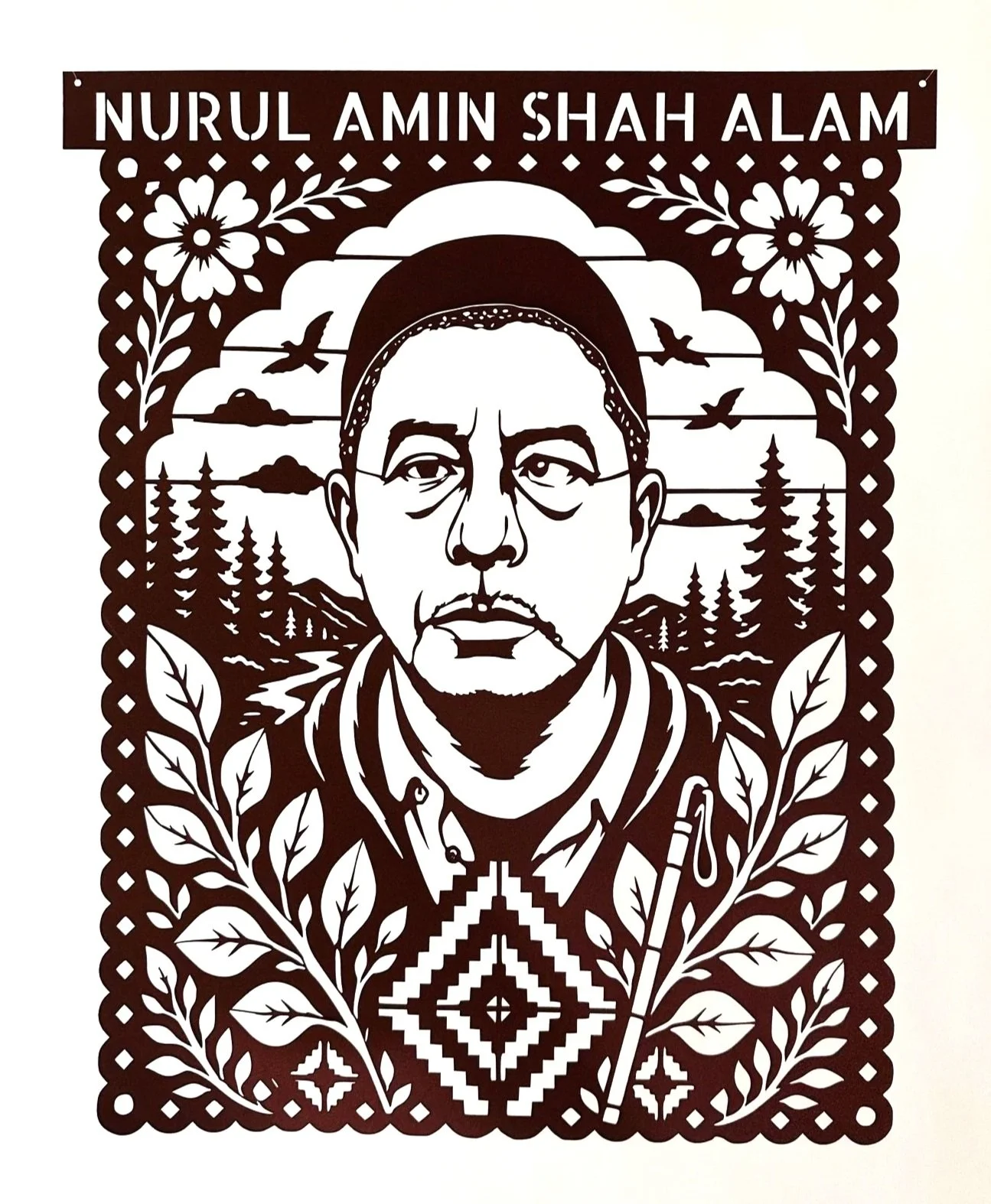
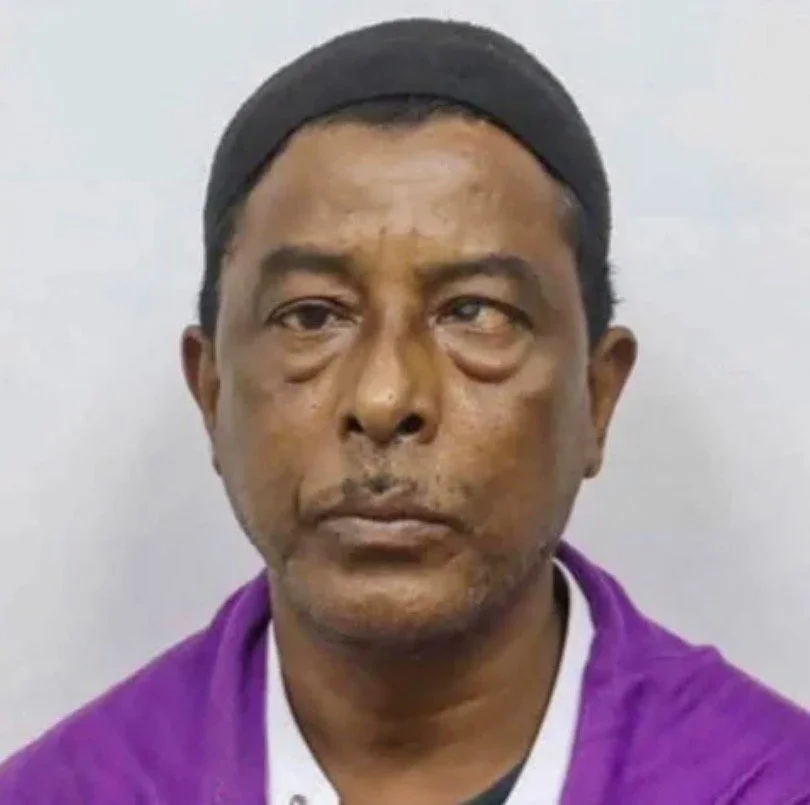
Nurul Amin Shah Alam
A portrait from Papel Memoria, a memorial archive by Alessandra Gutierrez.
Nurul Amin Shah Alam carried more than one country within him.
He carried Myanmar, where the Rohingya were taught that belonging could be taken by law, by soldiers, by fire, by fear. He carried Bangladesh for a time, where camps held his family between survival and whatever future might still be possible. He carried Malaysia, where he worked and kept going because that is what fathers do when history gives them no easy road. Then he carried Buffalo, New York, a cold city that was supposed to become a beginning.
Nurul came to the United States with his wife and children looking for safety, for a door that opened, for a morning where no one had to run.
He was nearly blind and spoke little English. After becoming confused and lost near a stranger’s home, he was arrested and detained during an encounter shaped by fear, disability, language, and misunderstanding. Body camera footage showed him trying to explain himself in Rohingya and Malay. The case was later reduced to misdemeanor trespassing and misdemeanor possession of a weapon. The weapon was a curtain rod he used as a walking stick.
When his family believed he was coming home, they were ready. His wife had prepared for his return. His son was waiting to bring him back to the place where he belonged.
But Nurul did not come home.
Border Patrol took him into custody because of an immigration detainer, then released him alone at night outside a freezing Buffalo coffee shop, miles from the people waiting for him. Days later, he was found frozen to death. The medical examiner ruled his death a homicide.
This portrait remembers Nurul Amin Shah Alam as a husband, a father, and a man who kept moving toward family through every country, every border, every loss.
What remains is the love that was waiting for him. The family that still carries him forward, not as a tragedy, but as someone beloved, someone missed, someone whose life reached farther than the place where it ended.
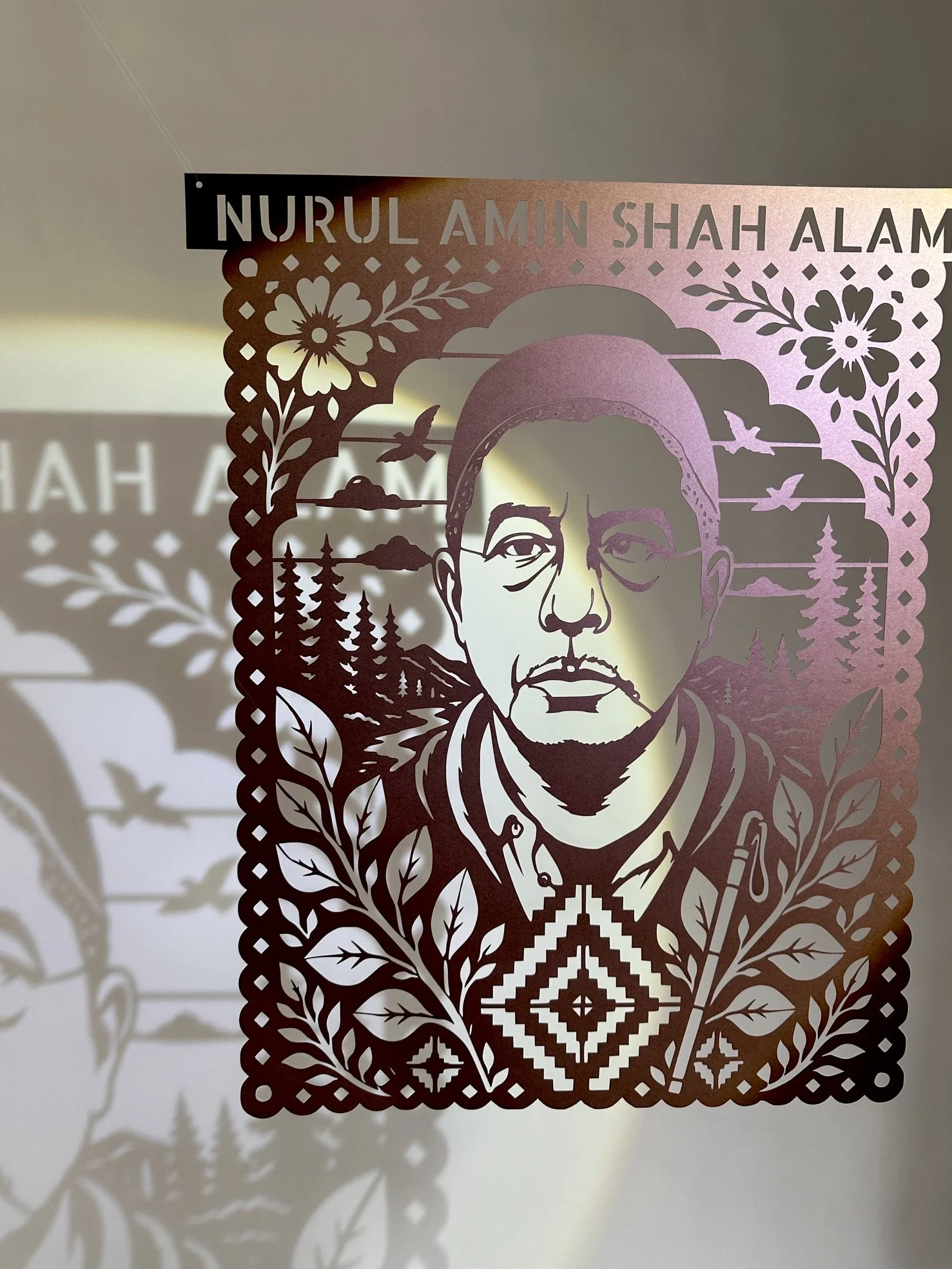
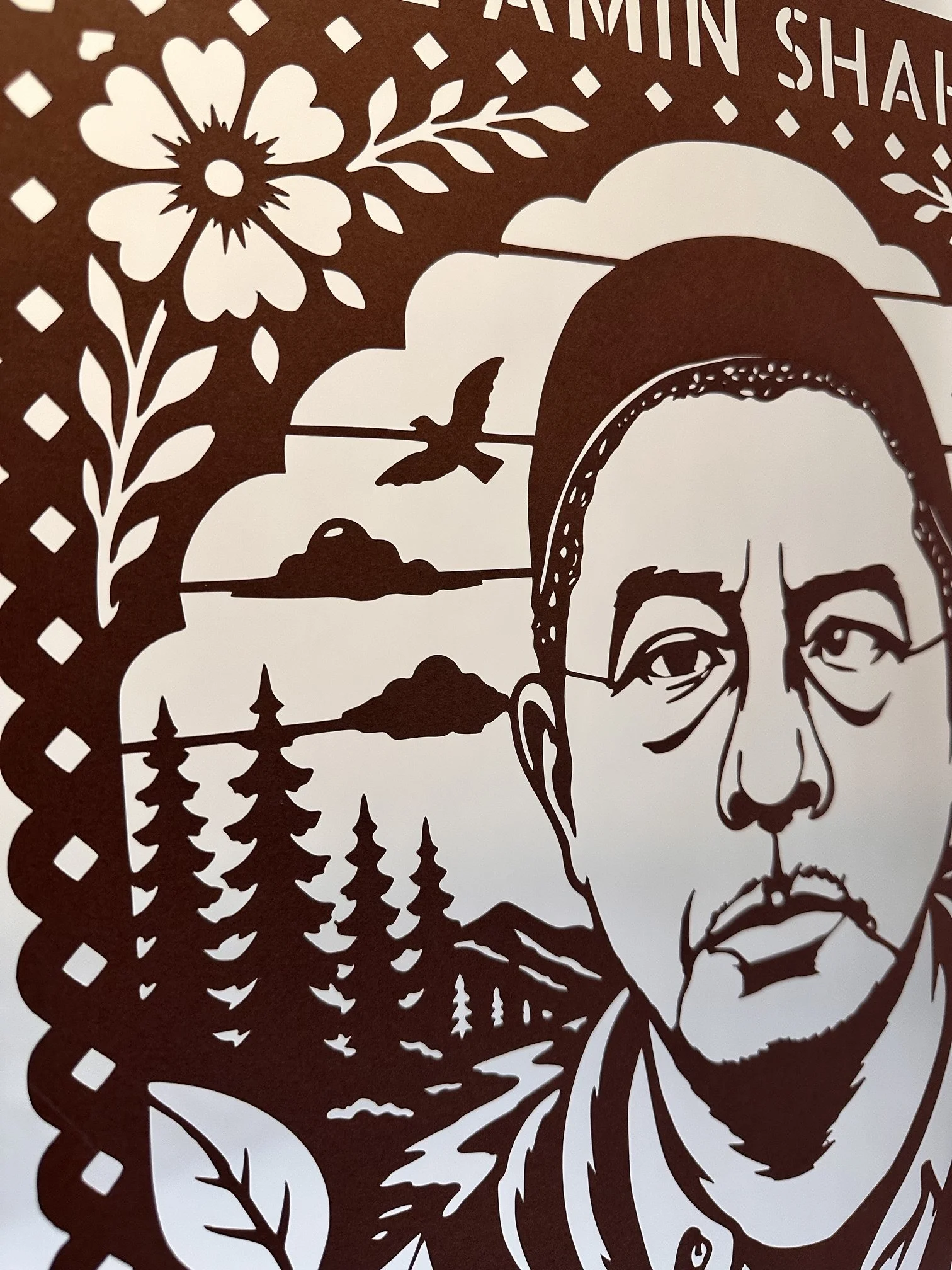
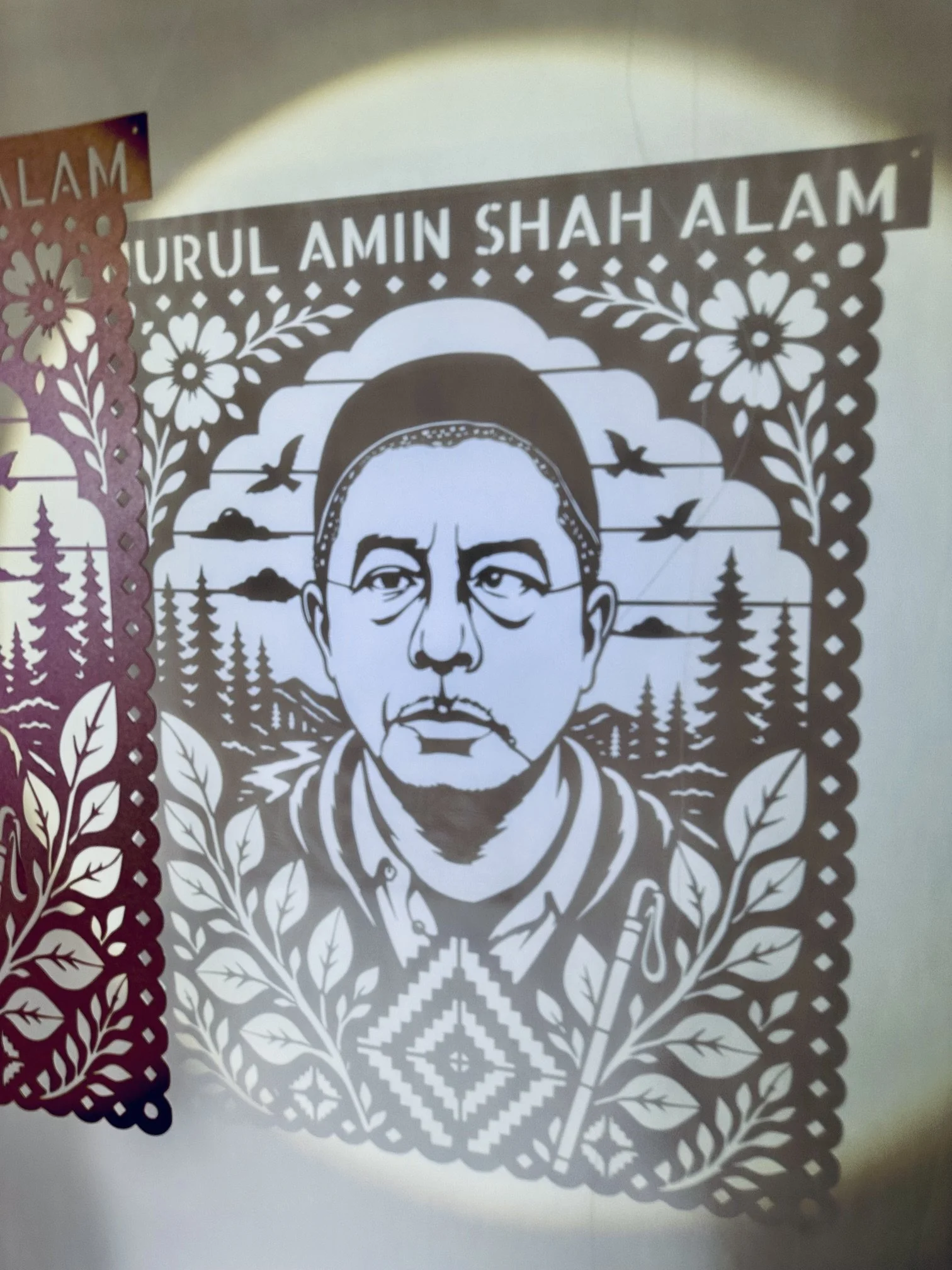
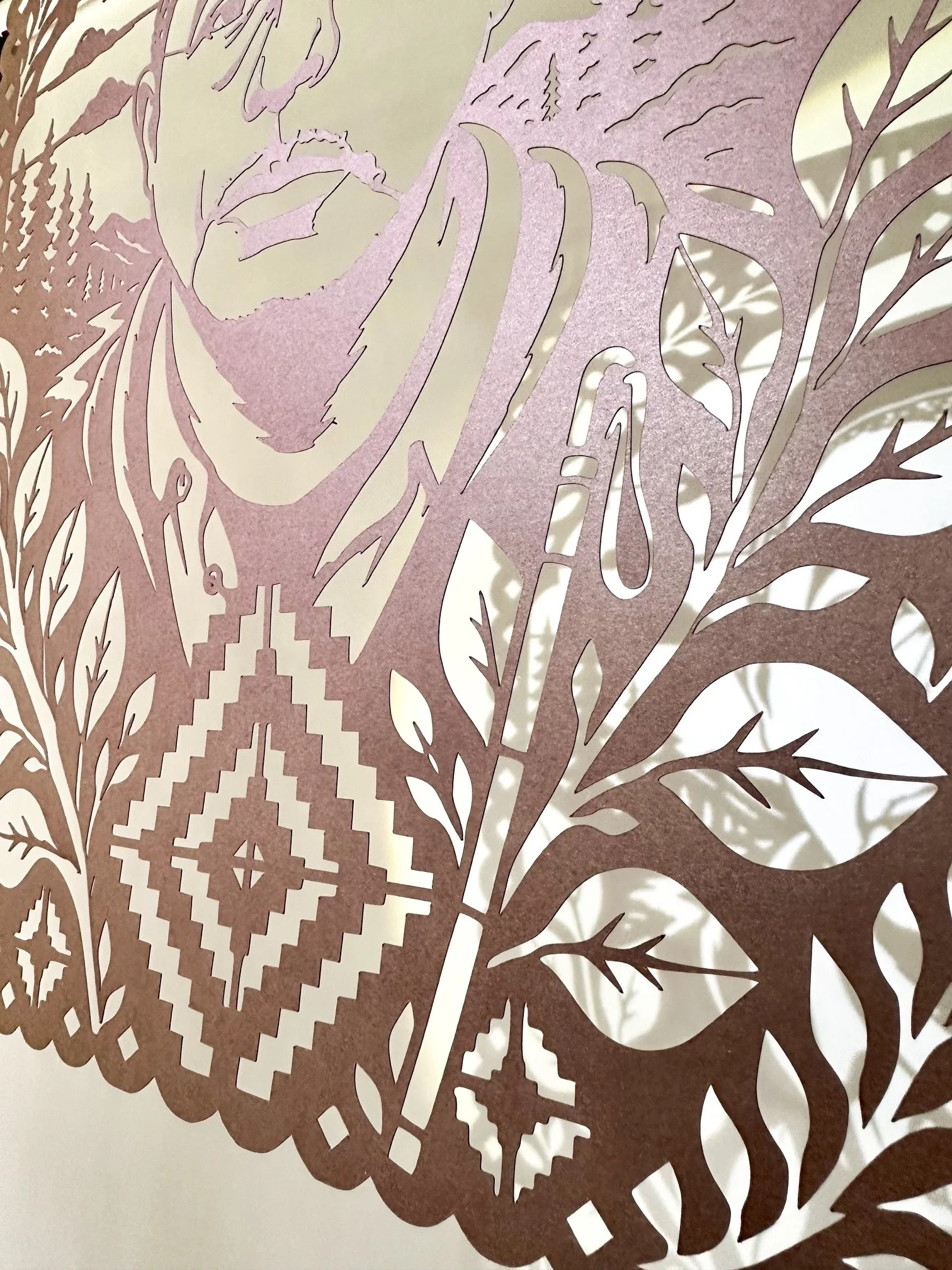
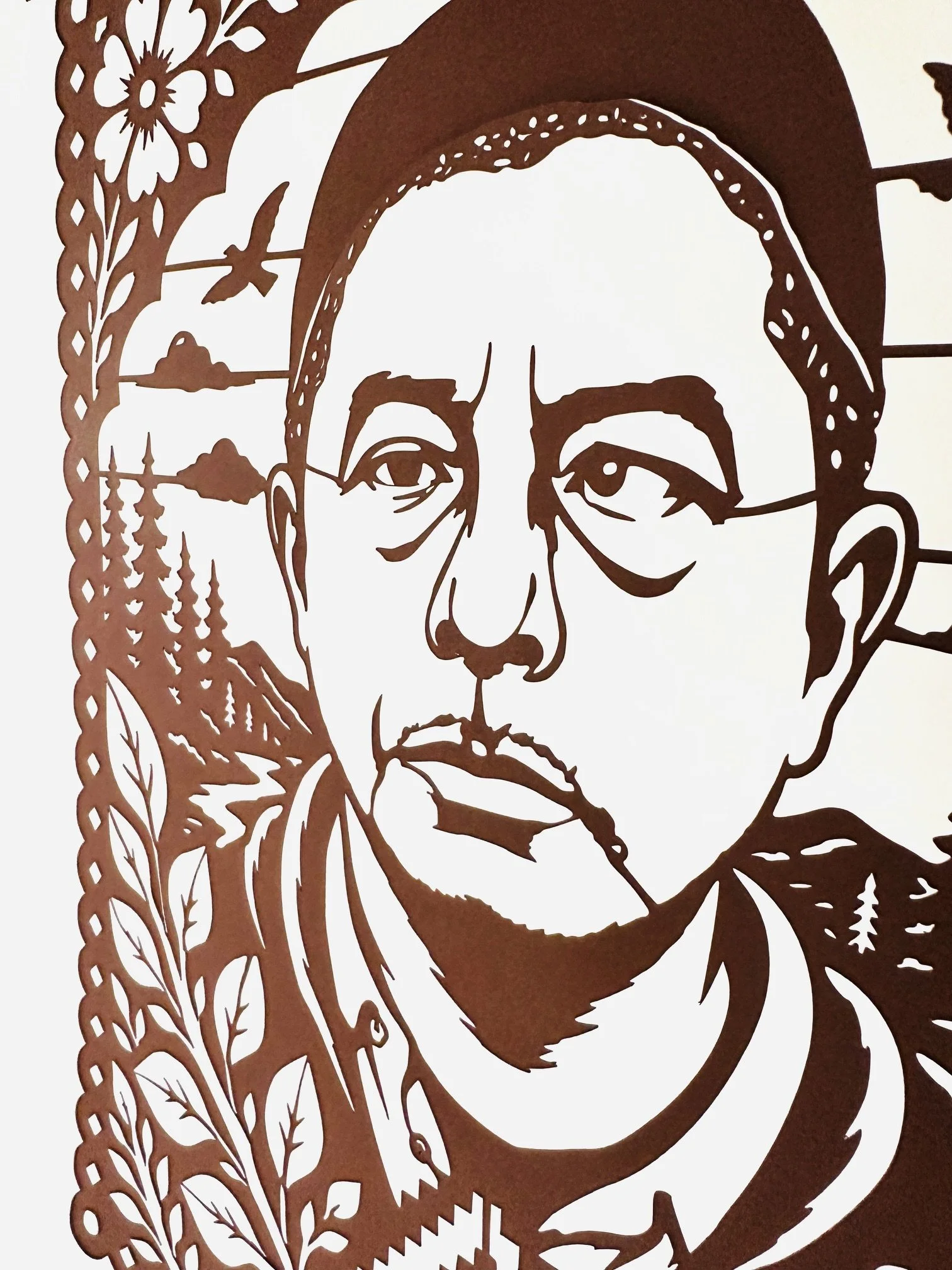

For the clearest detail and strongest finished piece, I recommend using cardstock and a cutting machine. (Check your local LIBRARY for one in their “Maker Spaces”) Cardstock provides the stability needed to hold the fine lines and structure of the design. You can download the black and white image directly from this site or access the full set on the Cricut website under the Papel Memoria. These templates are free to use for personal and community projects, but they may not be sold or used for commercial purposes.
To download the PNG file, click on the black and white image, open a new page and right click to save on to your computer. Alternately, you can visit the collection page on the Cricut website for all the files here.
For anyone without access to a paper cutter, poster size papel picado versions are also available to order here and can be shipped directly.