
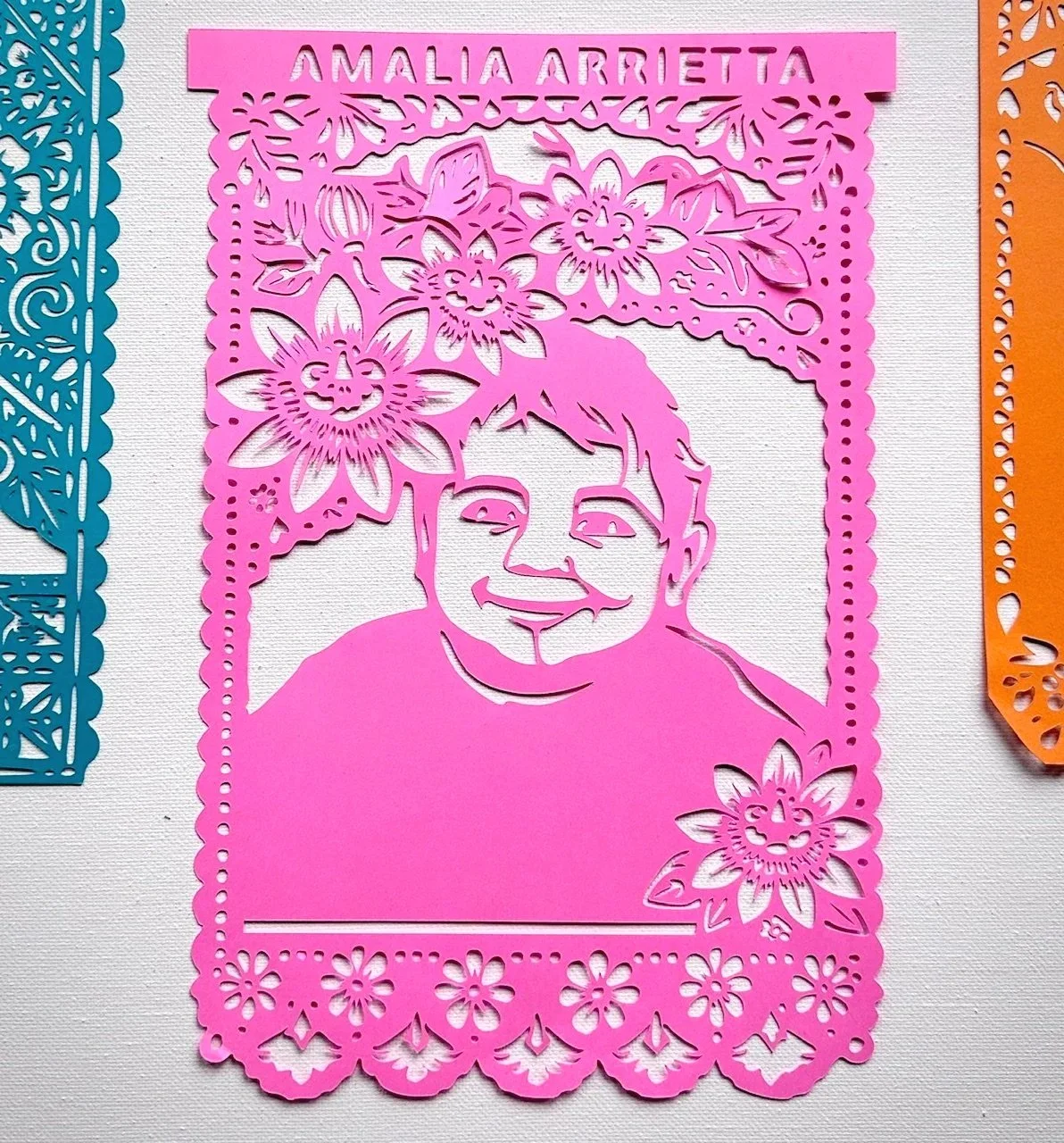
Amalia Arrieta
A portrait from Papel Memoria, a memorial archive by Alessandra Gutierrez.
Amalia Arrieta was just 18 months old when she got sick in ICE family detention after she and her mother, Kheilin Valero, were taken into custody following an ICE appointment in El Paso on December 11. Her mother says that for two weeks, as Amalia’s breathing got worse, she was given only basic medication before finally being hospitalized for 10 days and diagnosed with COVID-19 and RSV. By then, Kheilin said, her baby had developed pneumonia, bronchitis, and malnourishment from vomiting everything she ate. It is impossible to read her story and not see the human cost of detaining very young children.
Mica Rosenberg’s reporting in this ProPublica article shows that Amalia’s story was not an isolated one. Across Dilley, children described fear, illness, boredom, depression, and the pain of being cut off from the lives they had built in the United States. Many had been living here long enough to have schools, teachers, siblings, friends, routines, and whole communities they missed deeply, and some wrote letters begging not to be forgotten. ProPublica reports that around 3,500 detainees have cycled through the center since it reopened, more than half of them minors, and that about 300 children were held for more than a month despite the long-standing 20-day limit that generally applies to child detention. Families and advocates described delays in medical care, children constantly getting sick, worms and mold in food, overcrowded rooms, and children so distressed they self-harmed or talked about suicide. The article makes clear that what is happening in Dilley is not just detention. It is the daily wearing down of children and parents who had already come to this country looking for safety.
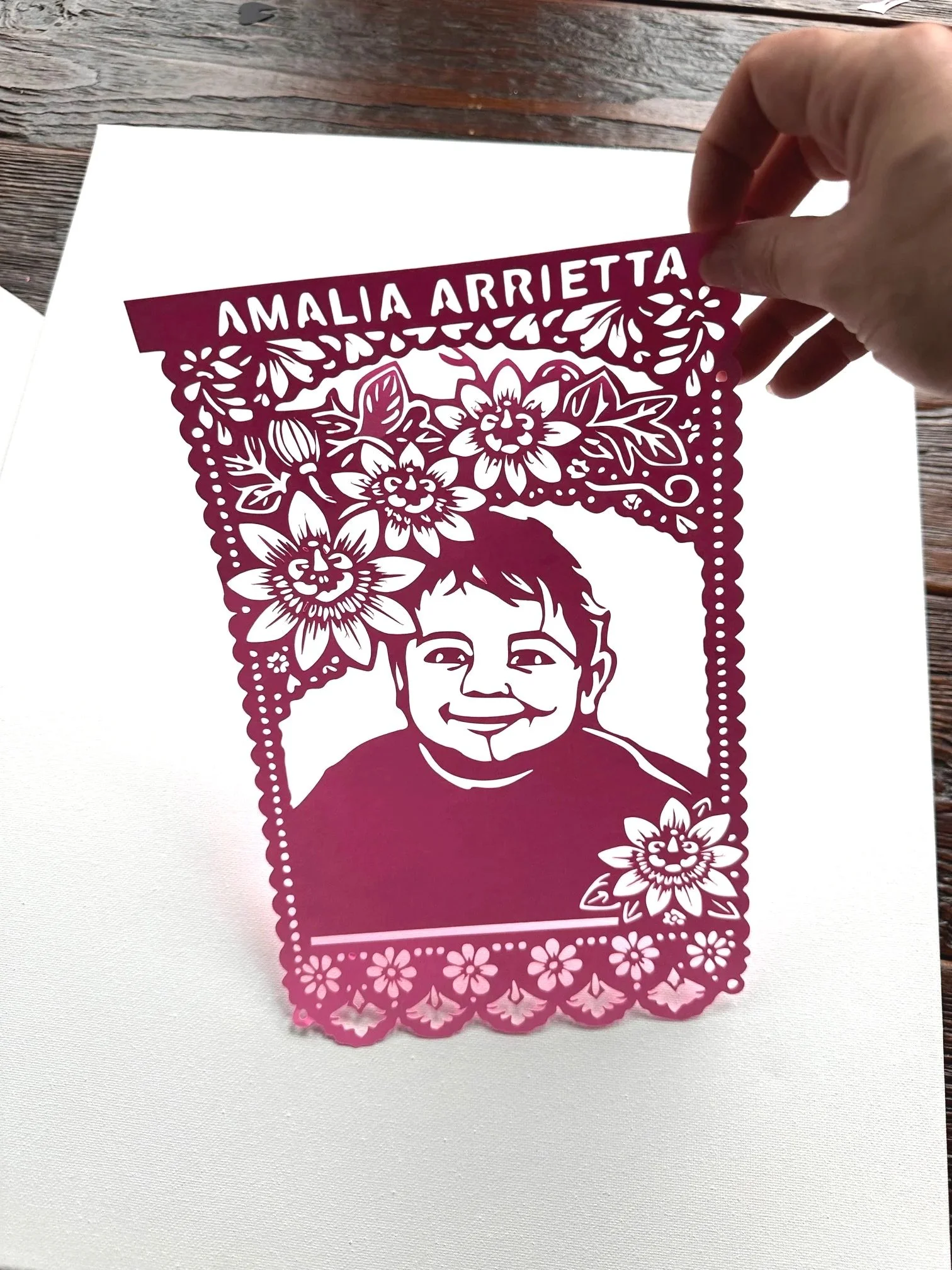
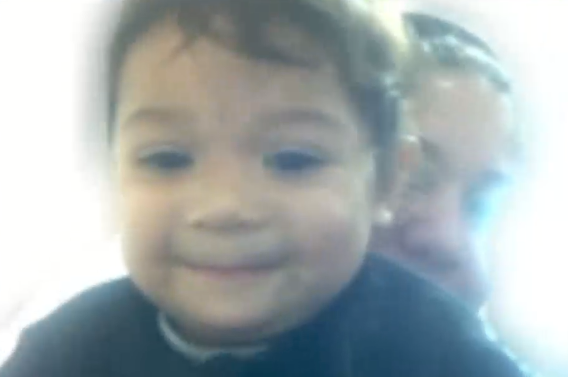
Image taken from a screenshot of Children detained at the immigrant family detention center in Dilley, Texas, speaking with ProPublica reporter Mica Rosenberg over video call.
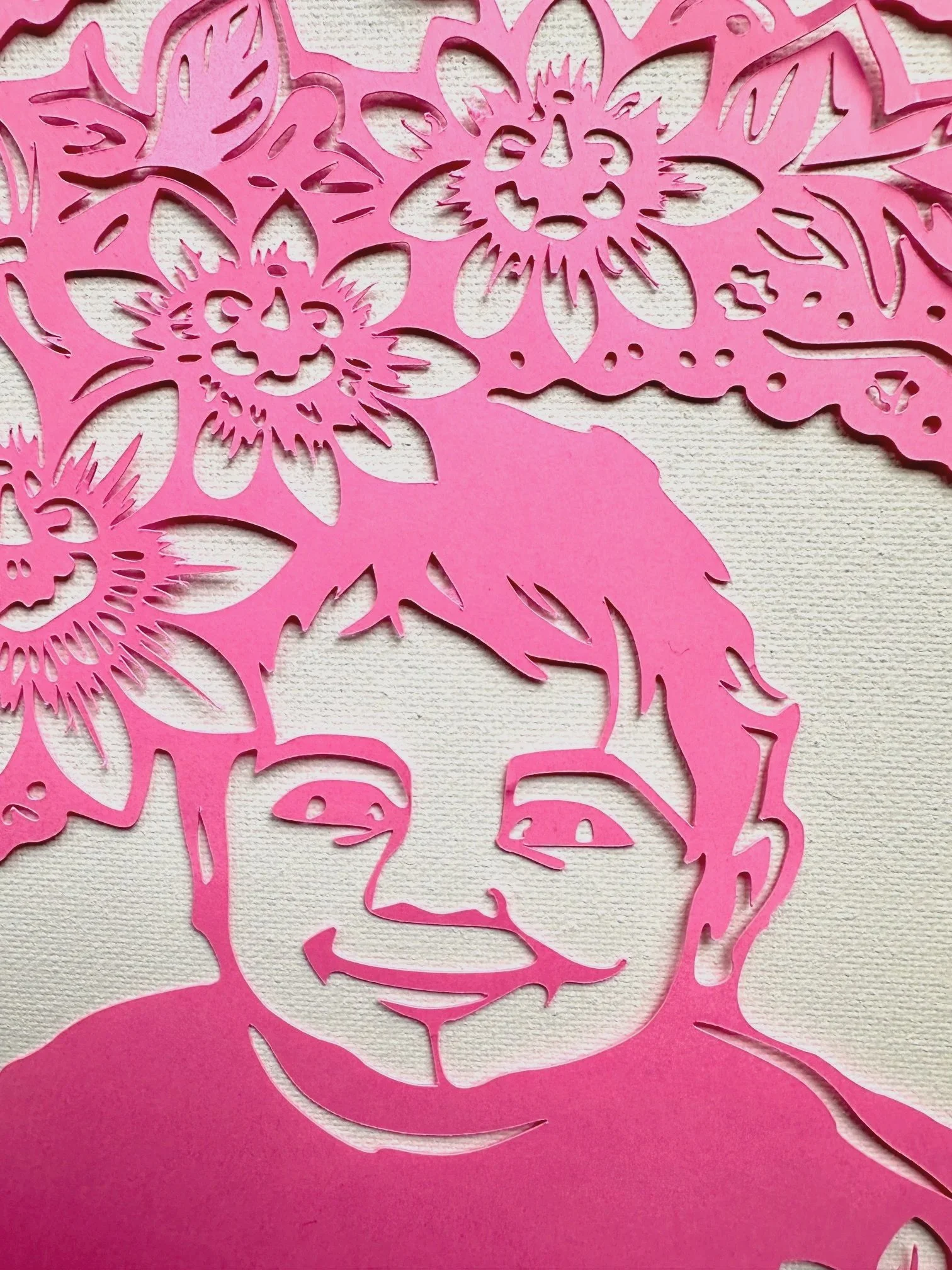

Download and Community Use
For the best results, I recommend using cardstock and a cutting machine. Cardstock provides the strength and stability needed to preserve the delicate details of each design. If you don't have a cutting machine, check your local library. Many libraries have Makerspaces where cutting machines are available for public use.
Download Your Files
PNG File: Download the PNG file here. Save to your computer once the file loads. PNG files can be printed directly from your computer.
SVG File: Download the SVG file here. Save to your computer once the file loads. SVG files can be scaled to any size without losing detail and are designed for use with cutting machines such as Cricut or Silhouette.
Usage: All Papel Memoria templates are free for personal use, community vigils, ofrendas, and memorial gatherings. They may not be sold or used for commercial purposes.
Don't have access to a cutting machine? Finished, poster-size papel picado portraits are also available to order and can be shipped directly to you.