
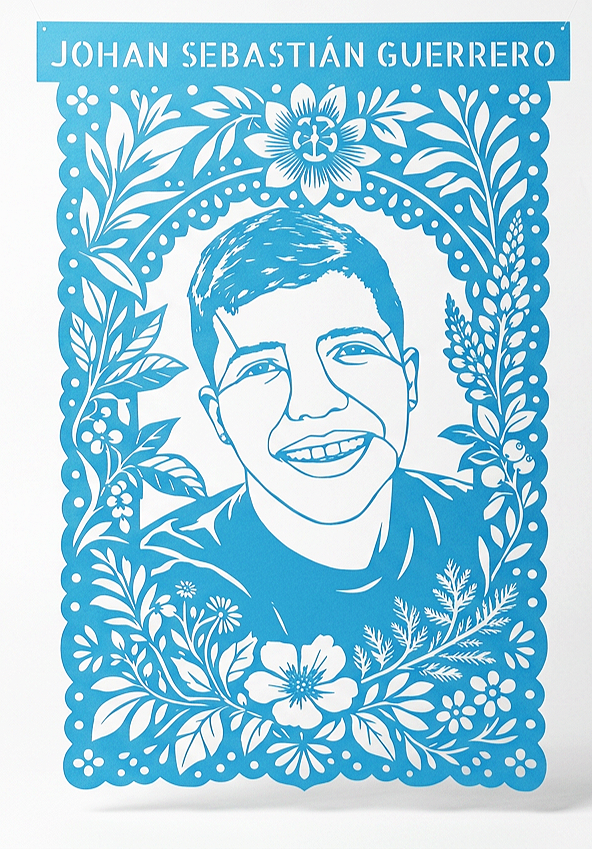
Johan Sebastian Durán Guerrero
A papel picado portrait from Papel Memoria, a memorial archive by Alessandra Gutierrez
Some faces tell you something before you know a single fact about the person. Johan’s was one of them.
As I worked from his photograph, I found myself slowing down around his smile. After months of creating these portraits, I have become familiar with the quiet architecture of a face. The muscles beside the mouth hold memories. They reveal habits we rarely notice in ourselves. Johan’s were fuller than most, as though smiling had become second nature to him. It made me imagine a man who greeted people warmly, who laughed easily, and who found reasons to soften the day for those around him.
He was twenty six years old. Born in Colombia, he carried with him the familiar hope shared by so many who leave home: the chance to build something lasting for the people they love. He worked hard, earned legal authorization to work in the United States, and was devoted to his wife and their young daughter, who was only three years old. Friends and family described him as generous, responsible, and full of plans for the future. Again and again, they returned to the same idea. He had dreams, and he was working toward them every day.
The composition follows the journey he made. On one side, a coffee plant and tropical foliage speak to Colombia, the country where his life began. On the other, Maine wildflowers and blueberries represent the place where he was building a new life. Johan rests between these two landscapes, surrounded by both the home he carried with him and the home he was working to create.
It is easy for a life to become compressed into a headline, reduced to a single moment that overshadows everything that came before it. But a life is never one moment. It is birthdays remembered, long days of work, quiet evenings at home, familiar jokes, the weight of a sleeping child in your arms, and the ordinary kindnesses that become the foundation of a family.
Looking at Johan’s photograph, I kept coming back to the shape of his smile. It seemed to hold something of the life he lived, the laughter, warmth, and ease he gave to the people around him.
That is what I hope this portrait carries forward. Not the final moment of his life, but the joy that came before it, the love he left behind, and the smile his daughter will always be able to recognize as her father’s.
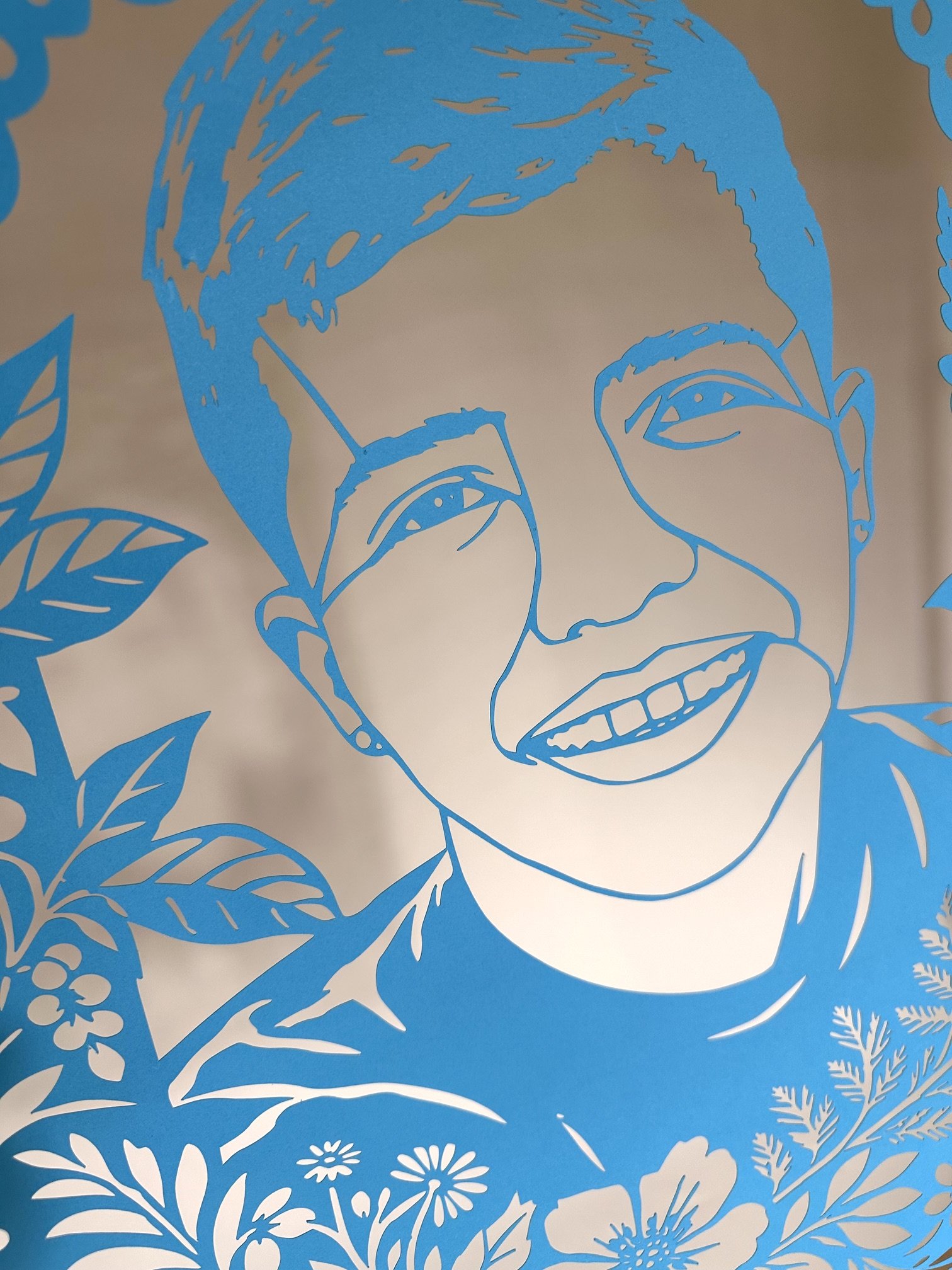
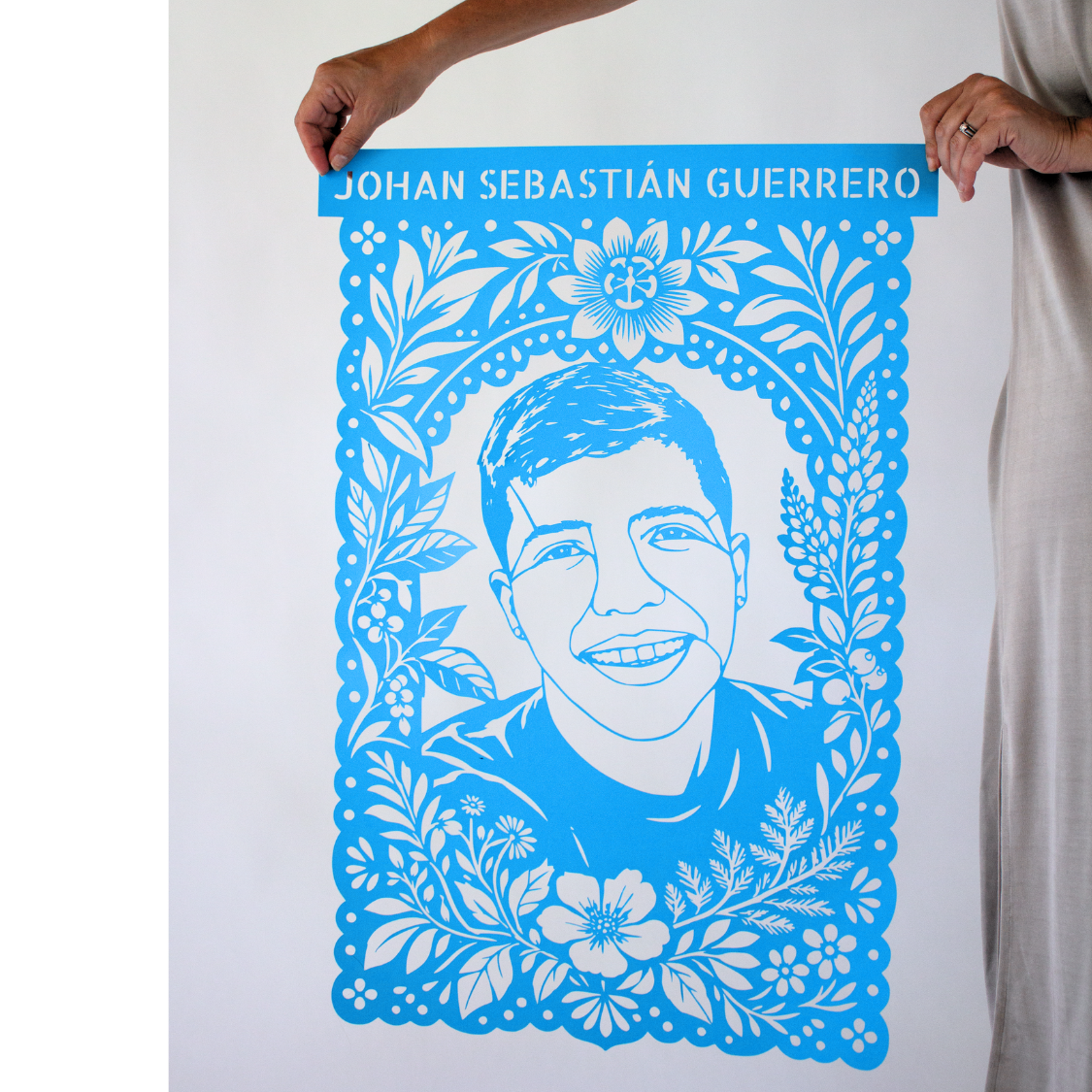
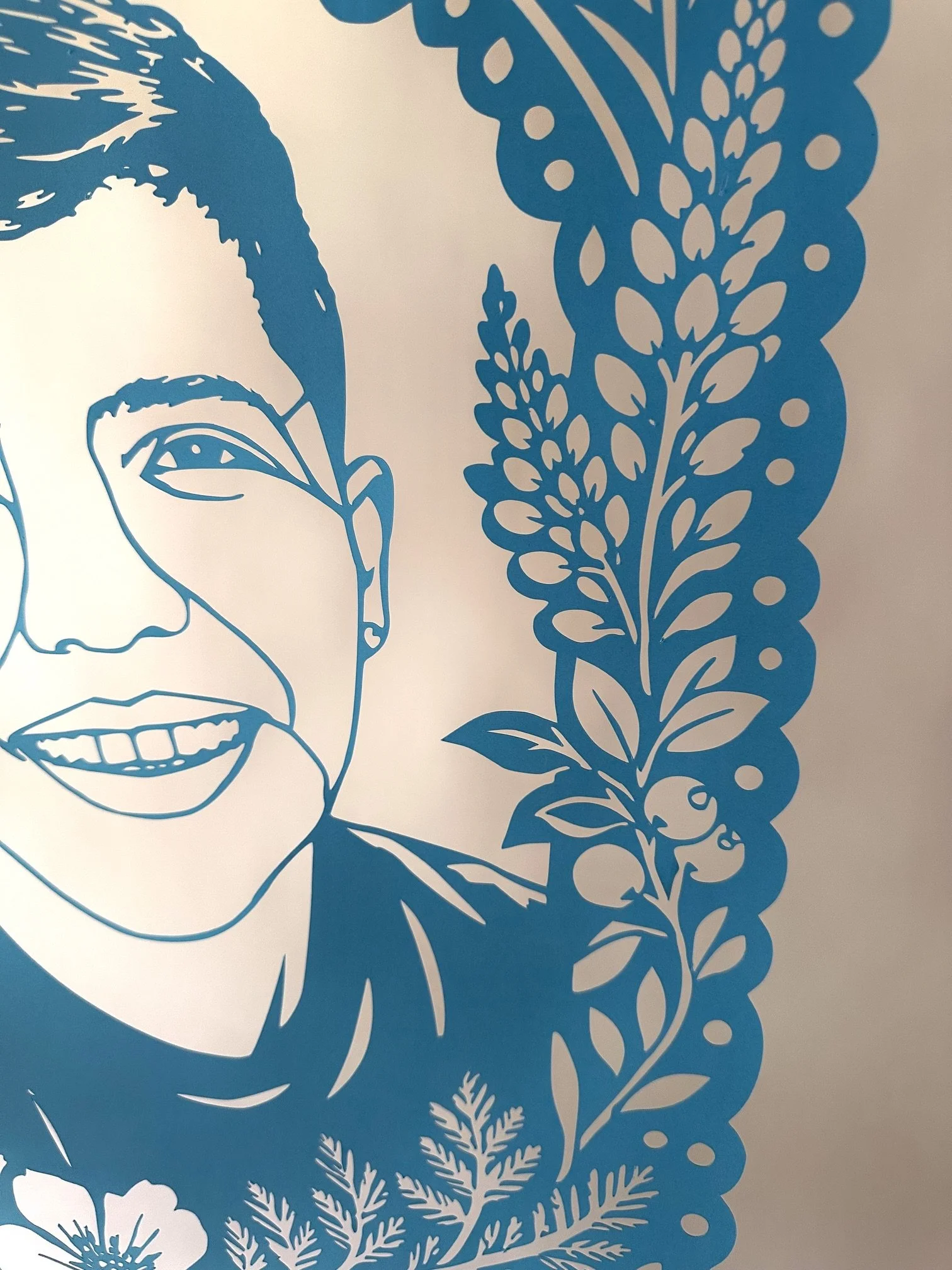
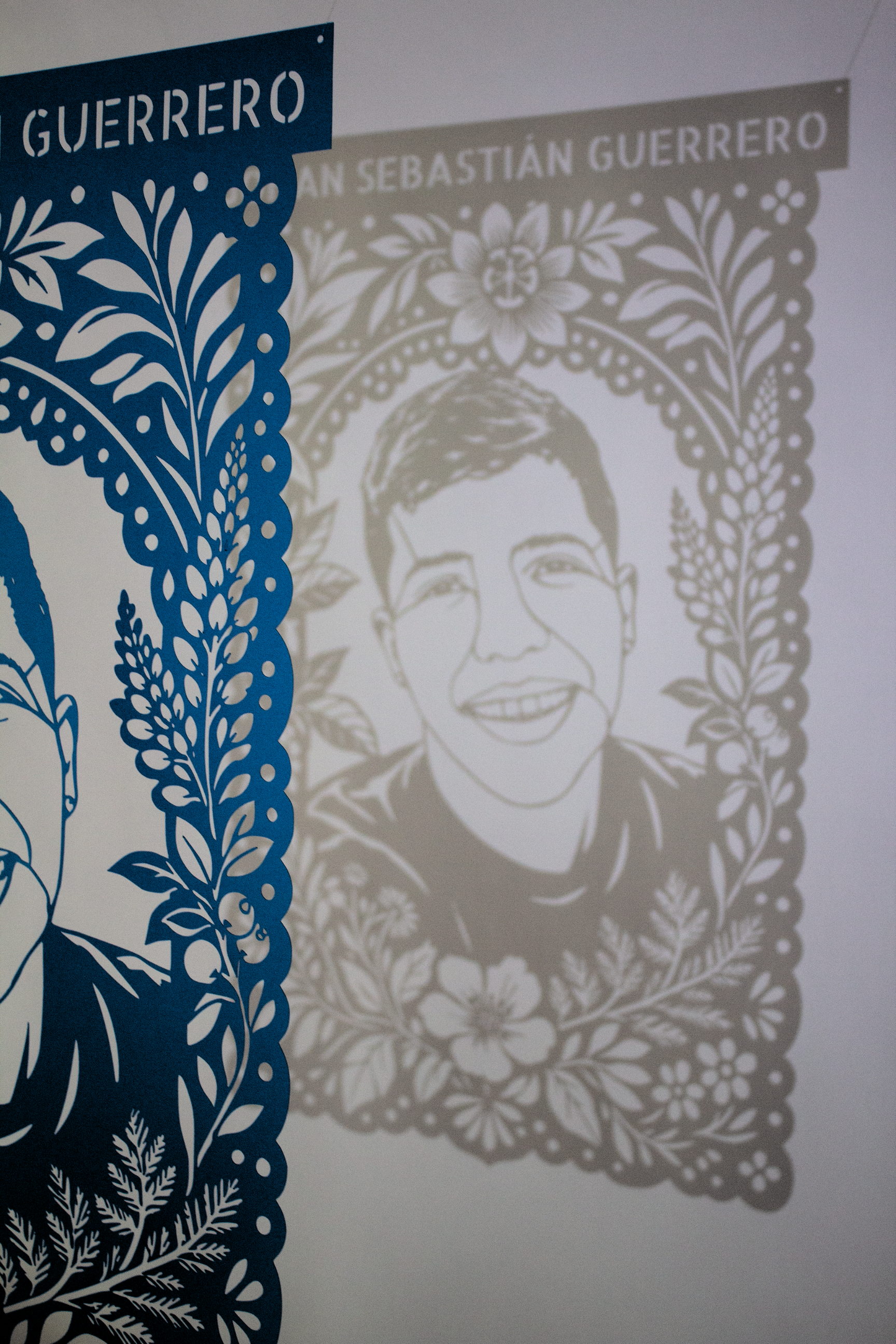

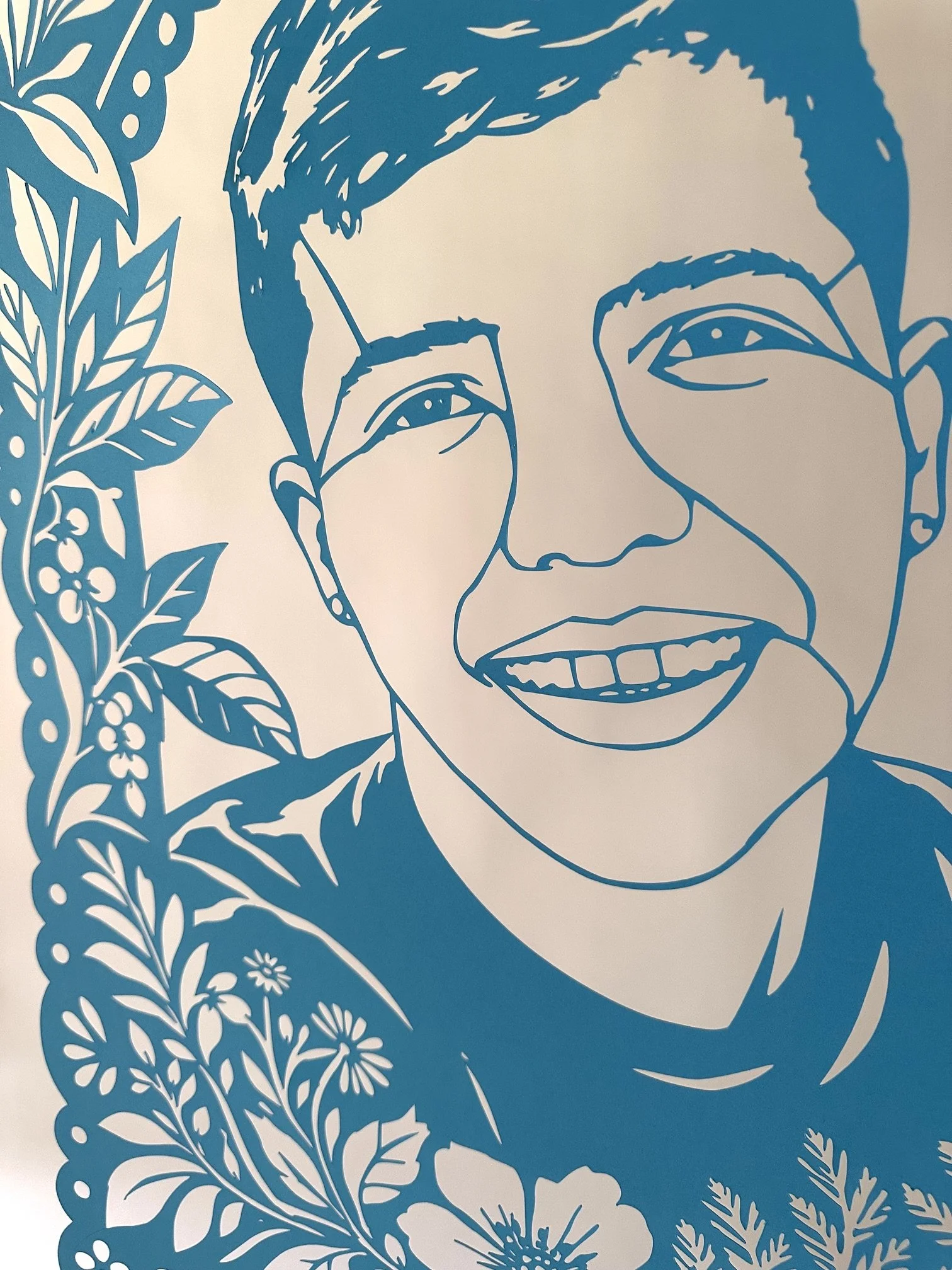

For the clearest detail and strongest finished piece, I recommend using cardstock and a cutting machine. (Check your local LIBRARY for one in their “Maker Spaces”) Cardstock provides the stability needed to hold the fine lines and structure of the design. You can download the black and white image directly from this site or access the full set on the Cricut website under the Papel Memoria Collection. These templates are free to use for personal and community projects, but they may not be sold or used for commercial purposes.
To download the PNG file, click on the black and white image, open a new page and right click to save on to your computer. Alternately, you can visit the collection page on the Cricut website for all the files here.
For anyone without access to a paper cutter, poster size papel picado portraits are also available to order here and can be shipped directly.