
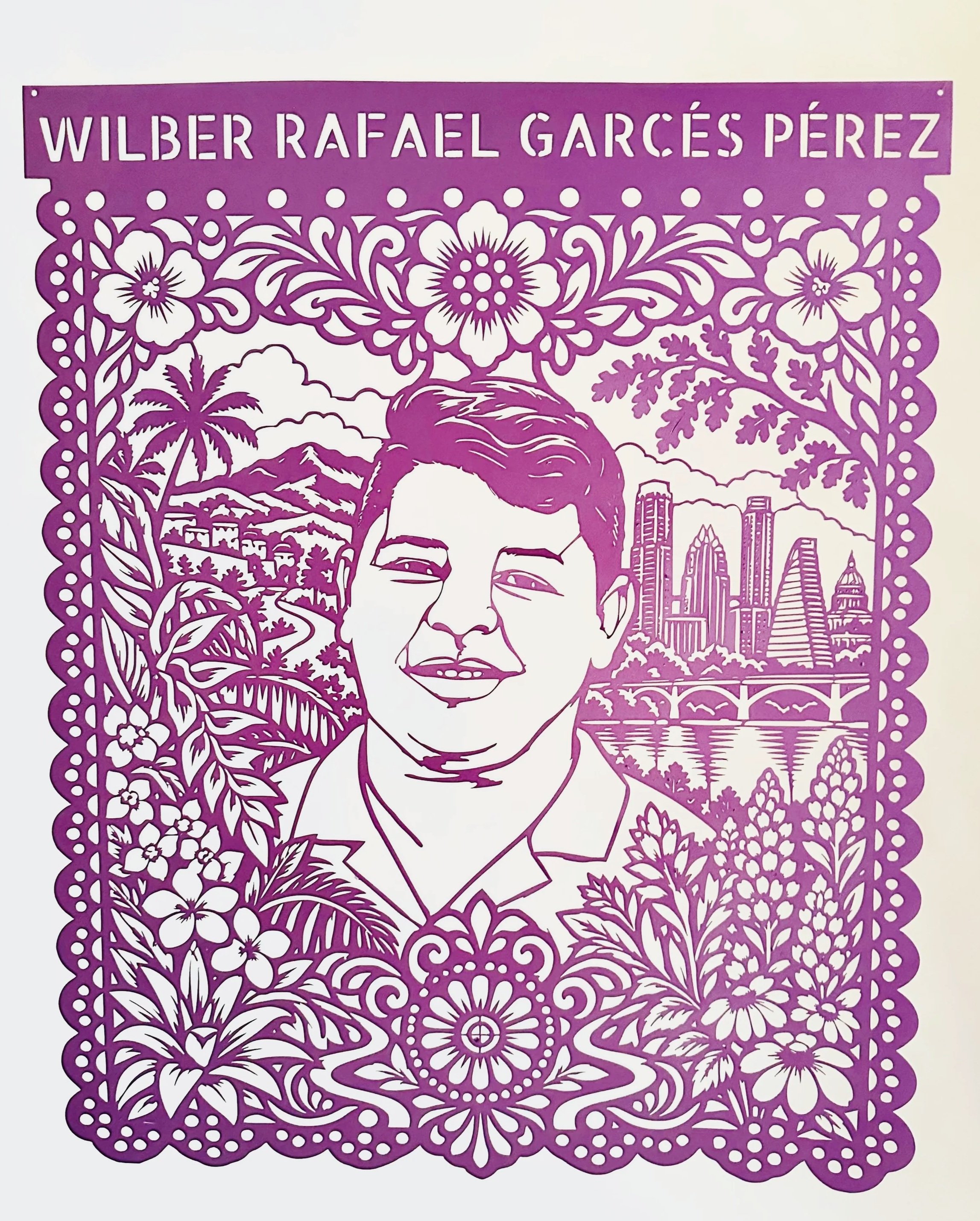
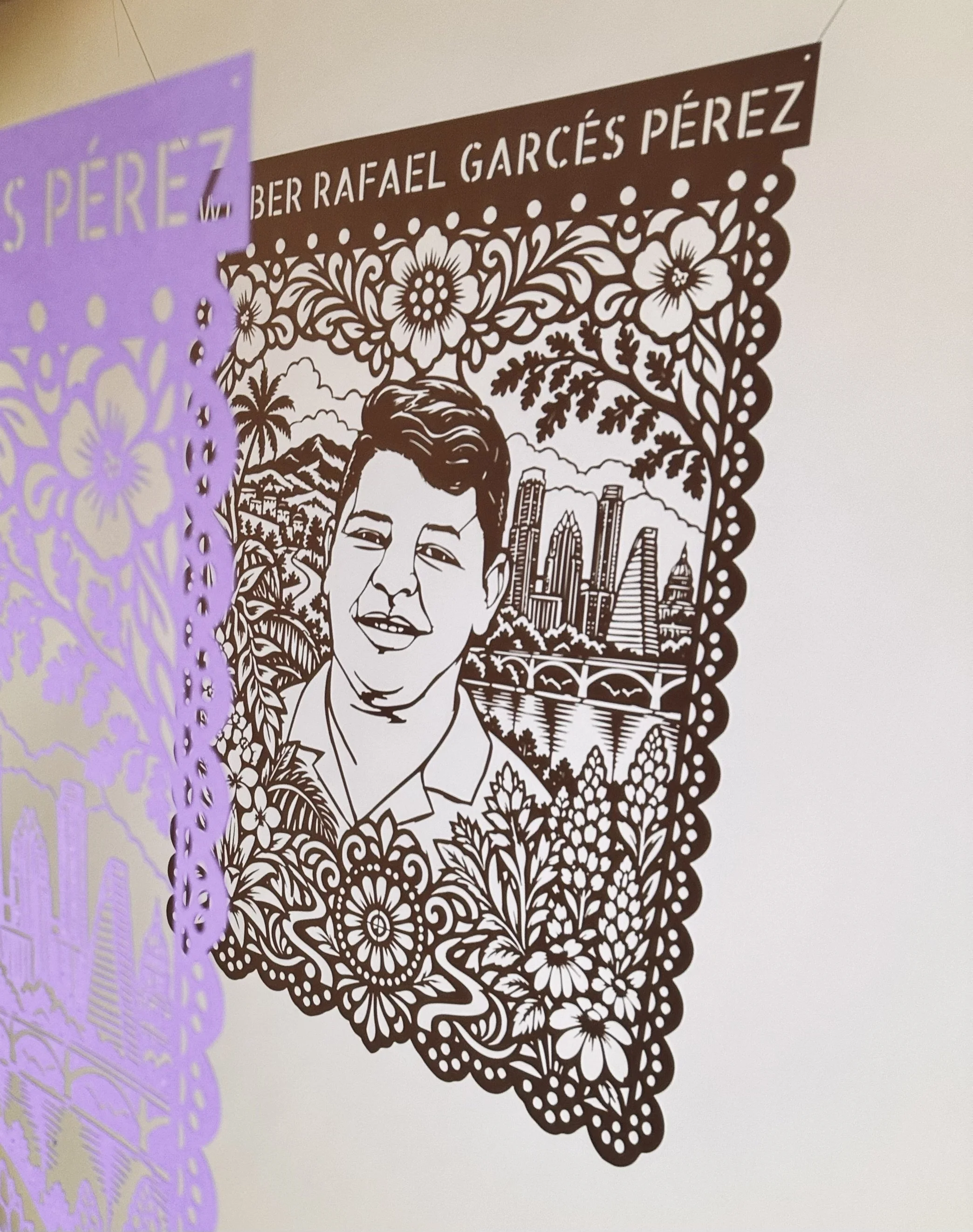
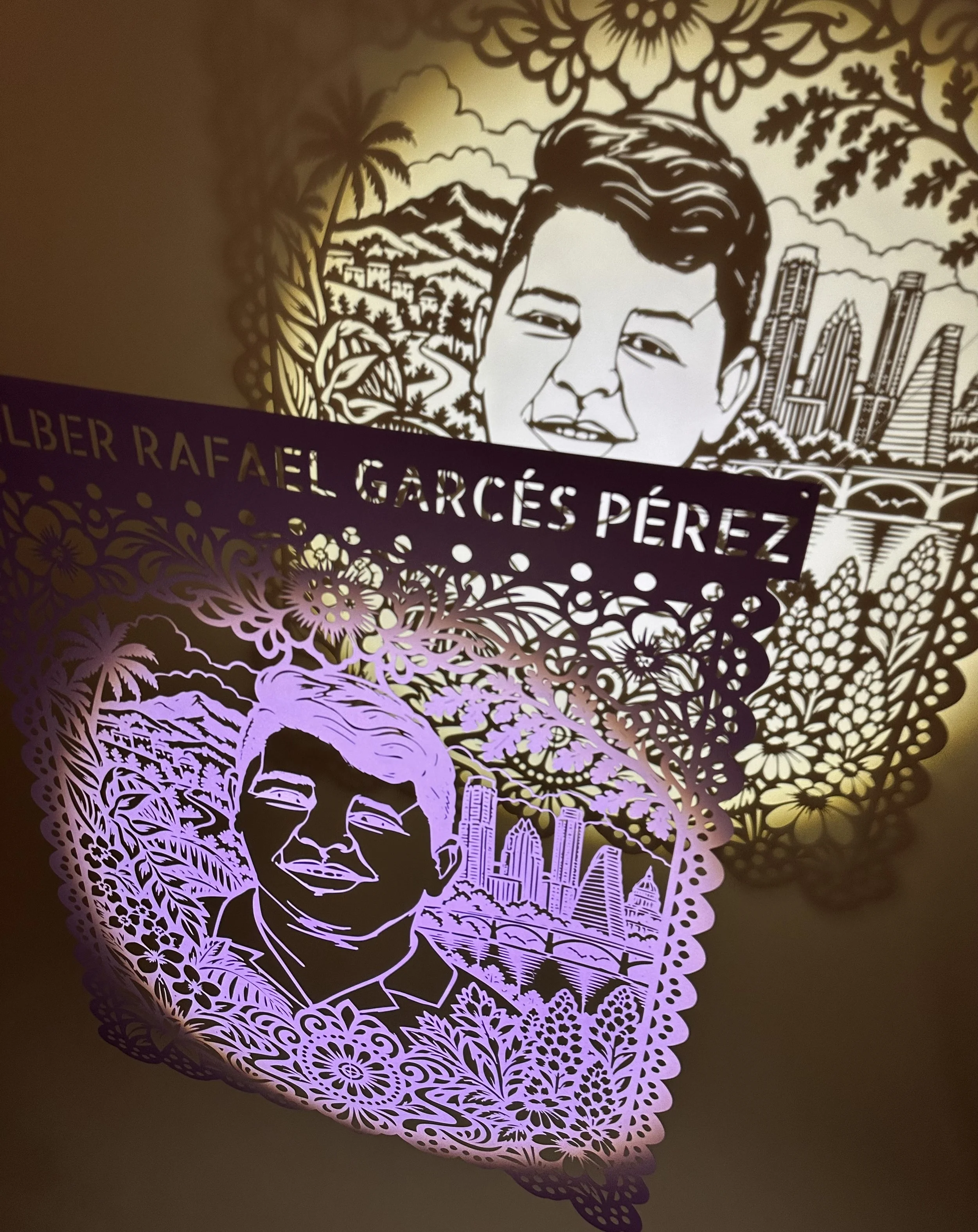
A papel picado portrait from Papel Memoria, a memorial archive by Alessandra Gutierrez.
Before Wilber Rafael Garcés Pérez became a name carried through the streets of Austin, his life was quieter.
Family. Soccer. Work.
That is how a childhood friend described him. Wilber grew up in Yaritagua, Venezuela, the oldest son in a family that came to depend on him. His son Axel is seven and lives in Venezuela. A complication during his birth left him with a disability that affects movement on the right side of his body, and much of what Wilber earned went toward his care, therapies and medical needs. His aunt says Axel is his life, his everything.
Wilber left Venezuela for Peru, where he worked in construction and later as a delivery driver. When opportunities became harder to find, he began the long journey north, crossing the Darién and eventually waiting in Mexico for an appointment through CBP One. He entered the United States through San Ysidro and made his way to Austin, where he built a life with his wife and returned to the kind of work he already knew, driving and making deliveries. Some days he worked ten hours at a time.
In the days before everything changed, Wilber and his mother were talking about the future. He wanted to save enough money to open a business in Venezuela and create greater stability for his family, especially for Axel.
WILBER RAFAEL GARCÉS PÉREZ

About the Portrait
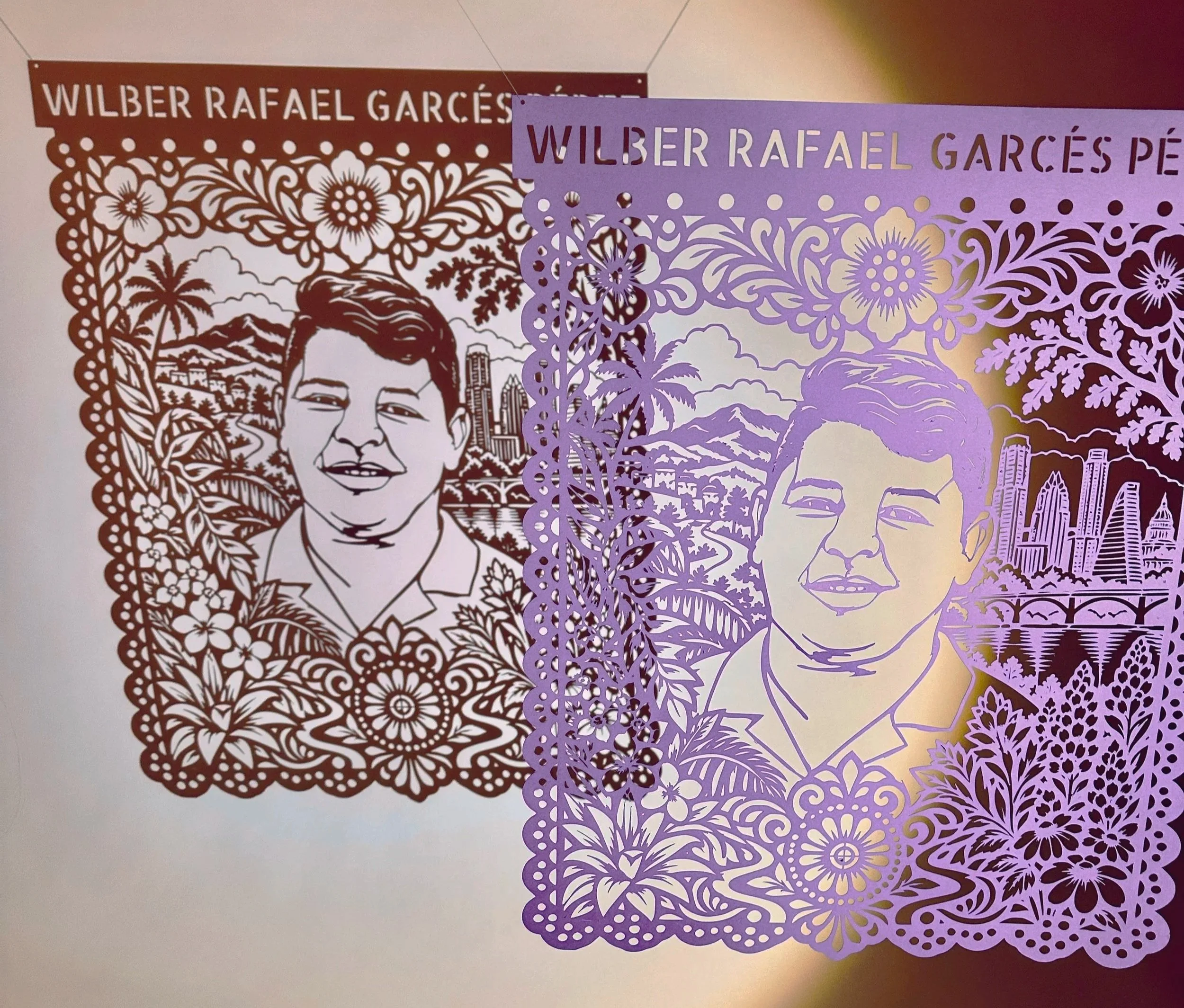
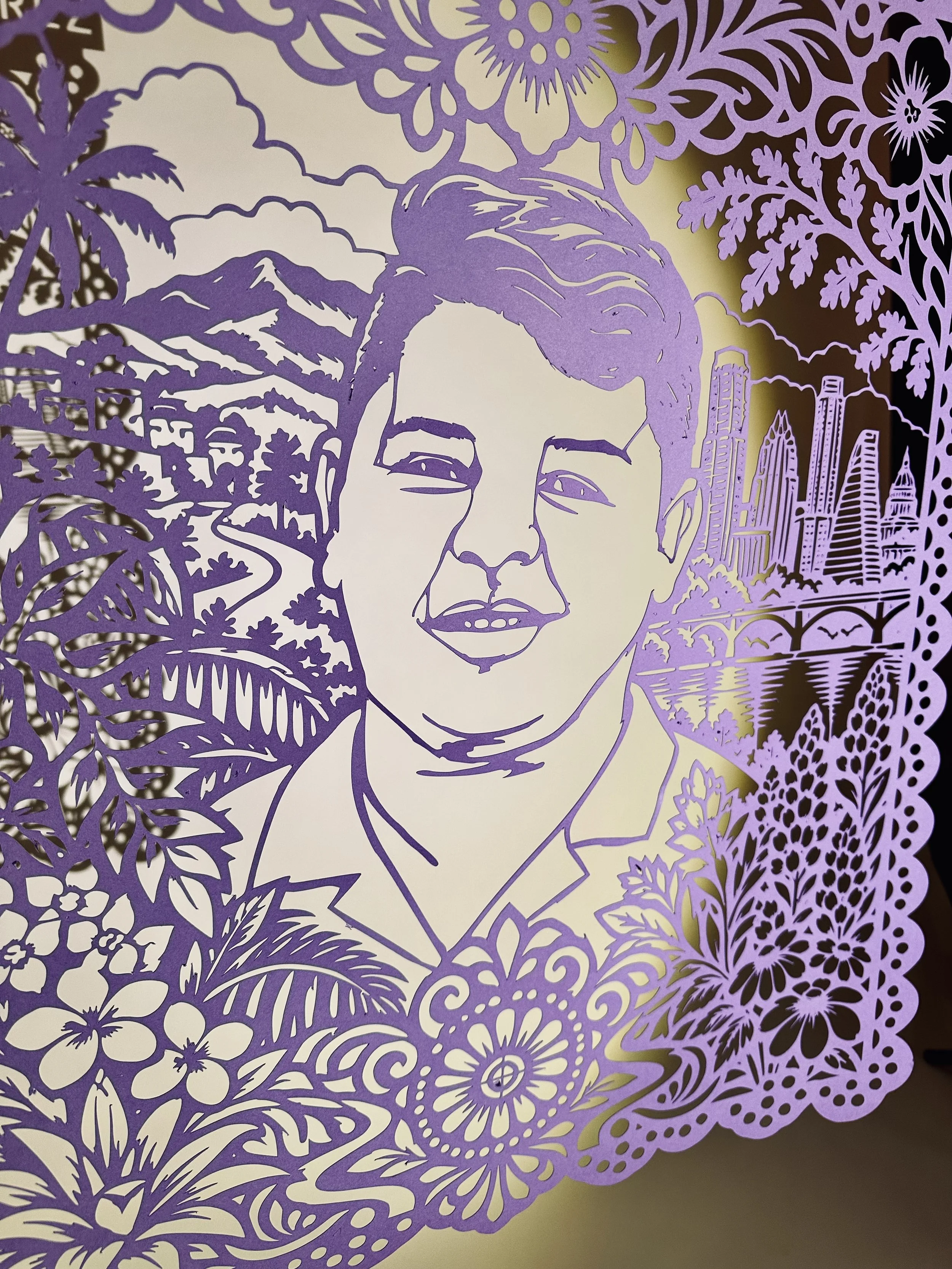
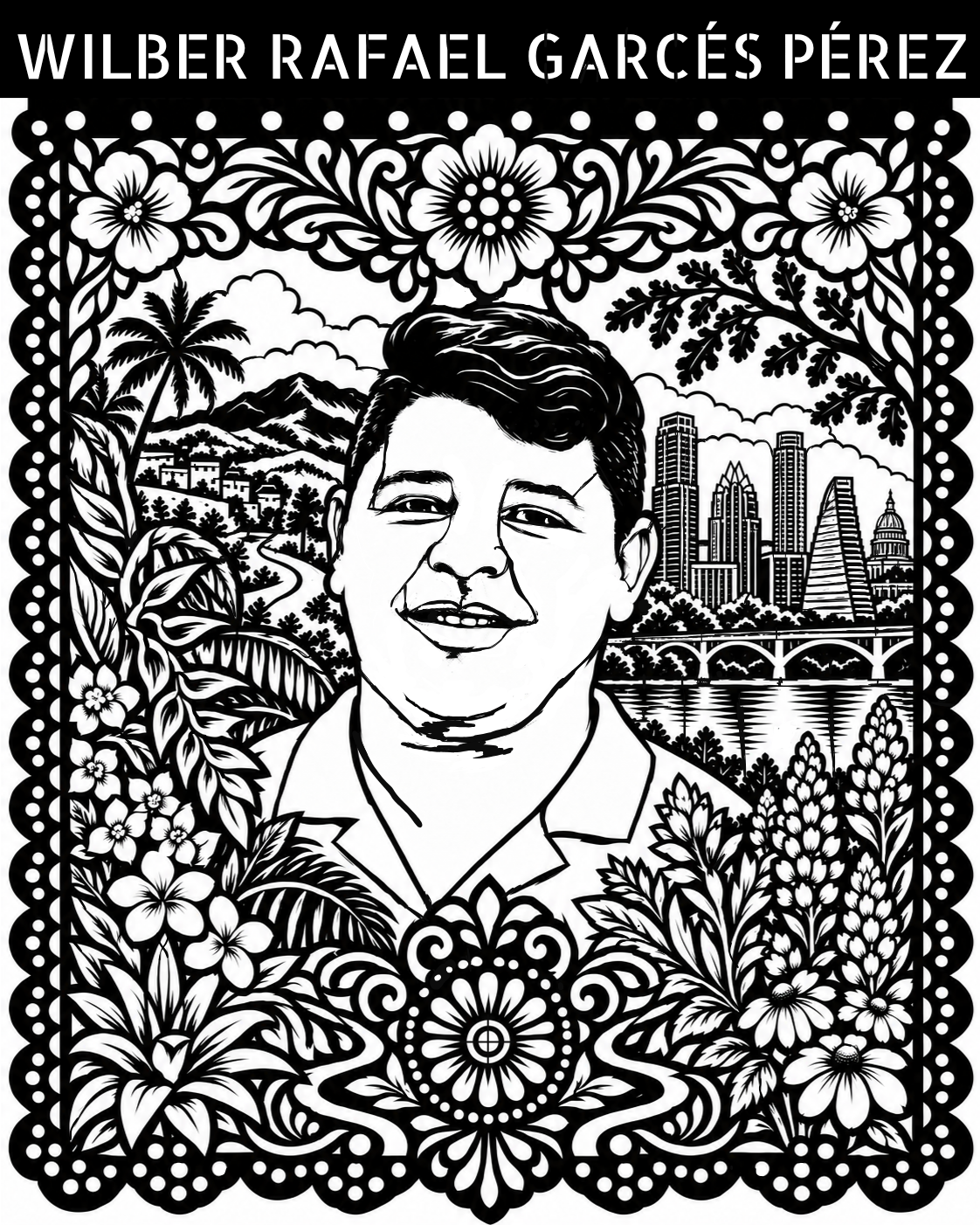
Wilber’s journey lives inside his papel picado portrait.
On one side are the mountains, tropical plants and flowers of Venezuela, with a road winding through the landscape toward the place where his story began. On the other, Austin rises above the water, surrounded by live oak and Texas wildflowers. The skyline is drawn from the city where he worked and made a home, while the road running through the composition echoes a life spent moving, working and trying to provide for the people he loved.
Wilber stands between the two places, surrounded by both rather than belonging entirely to one or the other.
At the bottom, the usual heart motif has been replaced by a circular floral medallion surrounded by flowing lines that resemble a road. His portrait is a story of movement, but also of return. Before the shooting, Wilber was already imagining the day when the distance between the life he had built and the family waiting for him might grow smaller.
On September 20, 2026, Wilber went out to work making DoorDash deliveries in Austin. His wife had asked him to stay home that afternoon, but he wanted to earn more money. During a vehicle stop by ICE officers, Wilber drove away and was pursued. Federal prosecutors say his side mirror struck an officer and that he later attempted to drive toward an officer. Wilber has given a different account, saying an unmarked law enforcement vehicle struck his car and that he was trying to find a safer place to stop. The ICE officer who ultimately fired his weapon was not wearing a body camera. Wilber was shot in the back.
The bullet fractured his clavicle and lodged near his spine. He was taken to a hospital but released into immigration custody only hours later with the bullet still inside him. In the days that followed he experienced severe pain and problems with movement and sensation on his left side, appearing in court in a wheelchair with his arm in a sling. A specialist recommended surgery. On October 1, eleven days after the shooting, surgeons finally removed the bullet. Wilber is now recovering while remaining in federal custody.
His immigration case is also unresolved. Wilber entered the United States through a port of entry and applied for asylum. His attorney says a notice for an immigration hearing was mailed to an old address even though he had updated his address with the court, resulting in a removal order issued when he did not appear. He now faces both immigration proceedings and a federal criminal charge arising from the September 20 encounter.
Wilber’s portrait is different from many in Papel Memoria because his story has not ended. It is being made while he is still here, while his family waits, while his body heals and while the questions surrounding what happened to him remain open.
For now, the portrait holds the life that existed before one violent afternoon threatened to define it: a father sending money home for his son, a husband who waited for his wife after her late shifts, a soccer player who once treated neighborhood games as though he were playing in a stadium, and a man who kept working toward a future he could see clearly enough to describe to his mother.
Download and Community Use
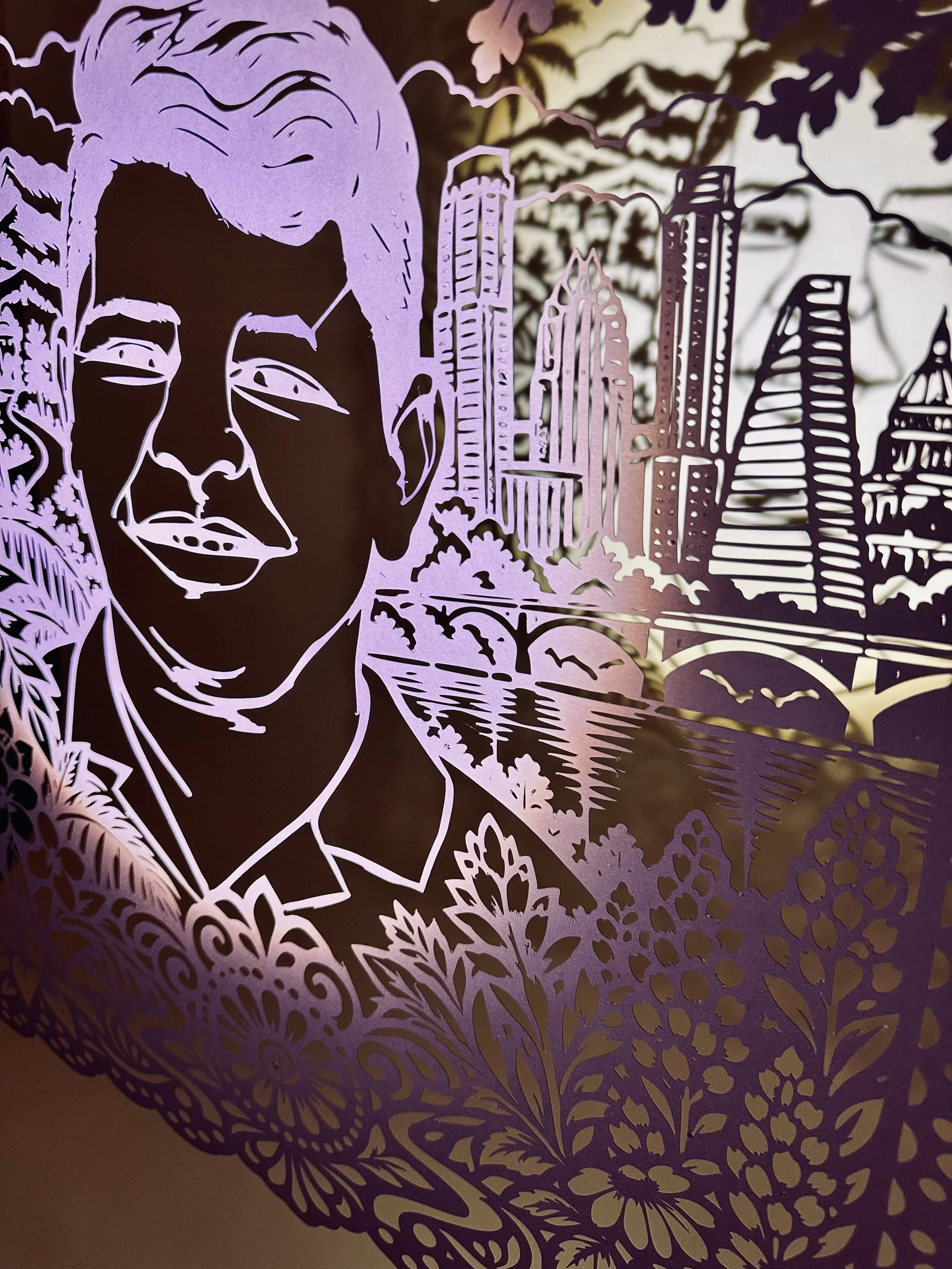
For the clearest detail and strongest finished piece, I recommend using cardstock and a cutting machine. (Check your local LIBRARY for one in their “Maker Spaces”) Cardstock provides the stability needed to hold the fine lines and structure of the design. You can download the black and white image directly from this site or access the full set on the Cricut website under the Papel Memoria Collection. These templates are free to use for personal and community projects, but they may not be sold or used for commercial purposes.
To download the PNG file, click on the black and white image, open a new page and right click to save on to your computer. Alternately, you can visit the collection page on the Cricut website for all the files here.
For anyone without access to a paper cutter, poster size papel picado portraits are also available to order here and can be shipped directly.
Sources and Further Reading
KUT 90.5 — Wilber Garcés Pérez’s life, family, work and relationship with his son in Venezuela
Univision — Wilber Garcés Pérez’s son, his medical needs and the support Wilber provided from Austin
Associated Press — Wilber Garcés Pérez’s shooting, medical treatment and federal case
Last updated: October 2026